Digital impressions use a handheld intraoral scanner to capture a precise, three-dimensional image of teeth and surrounding soft tissue. Rather than filling your mouth with impression putty, the scanner records a series of high-resolution images that are stitched together by specialized software to create an accurate virtual model. For patients, the result is a reliable digital record that serves as the blueprint for crowns, bridges, implant restorations, and other fixed prosthetics.
This process is widely adopted because it removes many of the inconveniences associated with traditional impressions—gagging reflexes, long setting times, and the uncertainty of distorted material. The virtual model can be inspected and corrected in real time, allowing clinicians to verify margins, occlusion, and tissue detail while the patient is still in the chair. That immediacy reduces the chance of remakes or adjustments later in treatment.
While the technology under the hood is sophisticated, the patient experience is straightforward: a noninvasive scan, a short review with your clinician, and a clear explanation of next steps. Our goal when using digital impressions is to make advanced restorative care easier to understand and more comfortable to receive, without sacrificing clinical rigor.
Intraoral scanners capture thousands of data points in a single pass, producing a digital map that is often more anatomically faithful than traditional impressions. That level of detail helps technicians and clinicians identify subtle margin lines and undercuts that are critical to a proper restoration fit. Because the digital model is not subject to the dimensional changes of gypsum or impression materials, it preserves the fidelity of the anatomy from scan to final restoration.
Clinicians can immediately examine the captured data and re-scan any area that requires refinement, which reduces the uncertainty that sometimes accompanies conventional workflows. This iterative feedback loop improves predictability: when the lab or milling unit works from a clean, complete digital file, the resulting restoration is more likely to seat accurately and require fewer chairside adjustments.
For complex cases—multitooth prostheses, implant-supported crowns, and full-arch rehabilitations—the ability to evaluate the scan in multiple digital views (occlusal, buccal, and cross-sectional) supports better treatment planning. That digital clarity helps the team make informed decisions about provisional restorations, occlusal schemes, and final material selection before fabrication begins.
One of the most immediate benefits patients notice is comfort. Traditional impressions can provoke gagging and discomfort, particularly for patients with sensitive soft tissues or a strong gag reflex. The scanning process is minimally invasive and typically completed in a fraction of the time it takes to mix, seat, and set impression material. For many patients, the experience alone reduces anxiety associated with restorative procedures.
From the clinician’s perspective, digital impressions streamline appointment flow. Real-time visualization enables same‑day verification and correction, which cuts down on callbacks for impression remakes. That efficiency translates into fewer appointments when the case and clinical workflow allow, and it supports a more predictable timeline for treatment completion.
Because the scanning device captures anatomy while tissues remain hydrated and in their natural position, the captured data can be more representative of how prosthetics will function in the mouth. This functional accuracy often leads to fewer adjustments at delivery and a smoother transition from provisional to final restoration for patients.
Digital impressions are the central element of modern restorative workflows that can include in-office design and milling. After a scan is completed, the digital file can be used to design a restoration with CAD software and then send instructions to an in-office mill or an external laboratory. In practices equipped for same‑day restorations, this capability enables the fabrication of durable ceramic crowns and other restorations during a single visit.
When an in-office CAD/CAM system is available, clinicians can oversee each step of the design process and make minute adjustments to contacts and occlusion before fabrication. This hands-on control helps ensure that the final restoration meets both functional and aesthetic goals. For patients, it means fewer appointments and the convenience of leaving with a finished, permanent restoration when clinically appropriate.
Even when a case requires collaboration with an outside dental laboratory, transmitting a high-quality digital file removes the delays and risks associated with shipping physical impressions. Electronic communication allows restorative teams to exchange notes, annotate models, and confirm specifications quickly, which helps keep treatment timelines on track without compromising craftsmanship.
Ultimately, digital impressions serve as the backbone of a coordinated, efficient restorative process—whether your treatment is completed in one visit or across several appointments coordinated with trusted laboratory partners.
Beyond comfort and fabrication speed, digital impressions improve how clinical teams manage restorative information. Digital files can be archived, duplicated, and shared without degradation, creating a permanent record of a patient’s baseline anatomy and restorative history. That archive is useful for follow-up care, comparisons over time, and situations where a replacement restoration is needed years later.
Secure transmission and industry-standard file formats make collaboration with specialized dental laboratories smoother and more reliable. When labs receive a clear, fully annotated digital impression, technicians can focus on craftsmanship rather than troubleshooting fit or distorted margins. Likewise, clinicians benefit from rapid turnaround and a more transparent line of communication throughout the fabrication process.
Integration with other digital tools—cone beam imaging, digital bite records, and virtual articulators—also enhances treatment planning. Combining datasets allows clinicians to evaluate occlusal relationships, implant positions, and esthetic considerations within the same digital environment. That convergence of information supports more predictable outcomes and a higher degree of clinical control.
Digital impressions represent a practical improvement in how restorative dentistry is planned and delivered: more comfortable for patients, more precise for clinicians, and more efficient for restorative workflows. They are especially valuable when used as part of a fully digital pathway that includes in‑office design and fabrication or streamlined lab communication.
At The Haddon Dentist, our goal in using digital impression technology is to provide patients with restorations that fit precisely, function reliably, and look natural—while making the process as comfortable and transparent as possible. We incorporate these tools thoughtfully so that technological advances support, rather than replace, clinical judgment and individualized care.
If you’d like to learn more about how digital impressions may affect your treatment options or whether same‑day restorations are appropriate for you, please contact us for more information. We’re happy to explain the process and how it may apply to your particular needs.


Digital impressions use a handheld intraoral scanner to capture a precise, three-dimensional representation of your teeth and surrounding soft tissues. The scanner records high-resolution images that specialized software stitches into an accurate virtual model suitable for restorative planning and fabrication. This noninvasive approach replaces traditional impression trays and materials while producing a durable digital record for crowns, bridges and implant restorations.
The resulting file can be viewed in multiple orientations, measured, and annotated to support laboratory communication or in-office CAD/CAM workflows. Because the data is electronic, it can be archived and duplicated without degradation, which helps with future restorative work and follow-up care. Patients typically experience less discomfort and clinicians gain immediate feedback to confirm capture quality before the patient leaves the chair.
Digital impressions capture thousands of data points in a single pass and produce a virtual model that is resistant to dimensional change, unlike gypsum casts made from physical impression materials. Traditional impressions can distort during removal, shipping, or cast pouring, which sometimes requires remakes; digital files eliminate many of those variables. The digital workflow permits immediate inspection and re-capture of any deficient areas while tissues remain in their natural, hydrated state.
Another key difference is workflow integration: digital files can be used directly with CAD design software and milling units or transmitted electronically to a dental laboratory. This reduces the risk of miscommunication tied to physical impressions and speeds up fabrication steps when an office is set up for digital restoration production. From a patient standpoint, scanning is often faster and less likely to trigger gagging or discomfort associated with bulk impression materials.
During a digital scanning appointment the clinician will move a small, wand-like scanner around the teeth and soft tissues while capturing a continuous stream of images. The process is noninvasive and typically completed in a matter of minutes, depending on the extent of the area being scanned and whether full-arch capture is required. Clinicians often display the scan in real time so they can verify margins, contacts and tissue detail and re-scan any areas that need refinement.
After the capture, the clinician will review the virtual model with you and explain next steps, whether that involves sending the file to a laboratory or proceeding to in-office design and milling. If your treatment plan includes an immediate restoration, the team will confirm fit, occlusion and esthetics before fabrication begins. The overall experience prioritizes patient comfort and transparency while preserving clinical accuracy.
Intraoral scanners capture highly detailed surface geometry that helps clinicians and technicians identify margin lines, undercuts and occlusal relationships that are critical to a precise fit. Because digital models are not subject to the shrinkage or expansion associated with impression materials and gypsum, the anatomical fidelity from scan to final restoration is better preserved. The ability to evaluate and re-scan immediately reduces the chance that a restoration will be fabricated from an incomplete or distorted record.
When laboratories or in-office mills work from a clean, well-annotated digital file, the resulting restorations are more likely to seat accurately and require fewer chairside adjustments. Clinicians can also use digital bite records and virtual articulators to fine-tune occlusion and contacts before fabrication. This iterative, data-driven process increases predictability and shortens the time between preparation and final delivery.
Yes. Digital impressions are the foundation of same-day CAD/CAM workflows because they supply the accurate, high-resolution files needed for in-office design and milling. When an office has an integrated CEREC or comparable system, the clinician can scan, design and mill a ceramic restoration during a single visit, which eliminates the need for a temporary crown and a second appointment in many straightforward cases. Real-time control over design parameters allows adjustments to contacts and occlusion before fabrication begins.
Even when cases require more complex laboratory work, a high-quality digital scan expedites communication and reduces the risk of remakes tied to physical impression errors. The clinical team retains oversight of the restoration from start to finish, which helps maintain quality and consistency. Patients benefit from fewer visits and the convenience of streamlined restorative care when same-day options are clinically appropriate.
Digital impressions are increasingly used for implant restorations and complex prosthetic cases because they allow multi-angle assessment of implant positions, soft-tissue contours and interarch relationships. Scan bodies or specialized implant components are captured and incorporated into the digital model, enabling precise laboratory or in-office fabrication of implant crowns and abutments. For multiunit and full-arch cases, digital datasets can be combined with cone-beam imaging and virtual implant planning for improved prosthetic-driven placement and restoration planning.
That said, complex full-arch rehabilitations often require rigorous scanning protocols, verification steps and close collaboration with experienced laboratories or digital technicians. Clinicians may use a combination of digital scans, radiographic data and physical verification techniques to ensure long-term accuracy. When executed correctly, the digital pathway supports predictable implant restorations with clear documentation for future maintenance.
Digital files are typically transmitted using secure, industry-standard protocols and file formats that maintain resolution and annotation information. Laboratories and clinicians use encrypted transfers or protected cloud services to exchange STL, PLY or similar files while preserving patient confidentiality and technical detail. Proper labeling and documentation accompany each file to communicate margin preference, material selection and any clinical considerations necessary for fabrication.
Within the office, digital records can be archived and duplicated without loss of fidelity, creating a reliable baseline for follow-up care. Access controls, secure backups and adherence to applicable privacy regulations help protect patient data over time. Clear electronic communication also reduces errors tied to ambiguous notes or physical shipping and permits more efficient collaboration between clinicians and laboratory technicians.
Digital impressions often reduce the need for repeat appointments caused by impression remakes or laboratory remakes, because clinicians can verify capture quality and re-scan immediately when necessary. In practices equipped for in-office CAD/CAM fabrication, patients may receive a permanent restoration during the same visit for eligible cases, which eliminates the temporary-to-final sequence typical of traditional workflows. Even when lab fabrication is required, the electronic transfer and improved accuracy typically shorten turnaround and improve scheduling predictability.
That said, the total number of appointments depends on the complexity of the case, the need for preparatory procedures and clinical judgment about timing. Cases that involve extensive implant work, occlusal equilibration, or staged rehabilitation may still require multiple visits to achieve the best functional and esthetic outcome. The digital workflow is a tool to increase efficiency, but clinical planning and individualized care continue to guide treatment timelines.
Although intraoral scanners are highly capable, certain clinical situations can present challenges for capture, such as subgingival margins that are difficult to visualize or excessive saliva and blood that obscure detail. Extremely limited mouth opening or highly reflective materials can also complicate scanning in some patients. In those circumstances a clinician may supplement the digital approach with alternative techniques or careful tissue management to ensure accurate margin capture.
Some laboratories and restorative workflows prefer or require specific verification steps for very large restorations or complex implant frameworks, which can include physical models or verification jigs. The choice between digital and traditional methods is driven by case complexity and the clinician’s assessment of which approach will yield the most reliable outcome. A thoughtfully integrated workflow often combines the strengths of both digital and conventional techniques when appropriate.
The office of The Haddon Dentist uses digital impressions as a central element of restorative planning to improve precision, patient comfort and communication with laboratory partners. Scans are reviewed in real time to confirm margin detail, occlusal relationships and tissue contours, and the resulting files are used for in-office CAD/CAM design or secure laboratory transmission depending on the clinical plan. This approach supports same-day restorations when appropriate and creates an archival record that assists with future care.
Clinicians integrate digital scans with other diagnostic tools such as digital radiography and virtual articulators to create comprehensive treatment plans that address both function and esthetics. The practice emphasizes clinical judgment and individualized care when selecting a digital pathway, ensuring that technology enhances rather than replaces the clinician’s decision-making. Patients benefit from a transparent process that prioritizes accuracy, comfort and coordinated restorative outcomes.
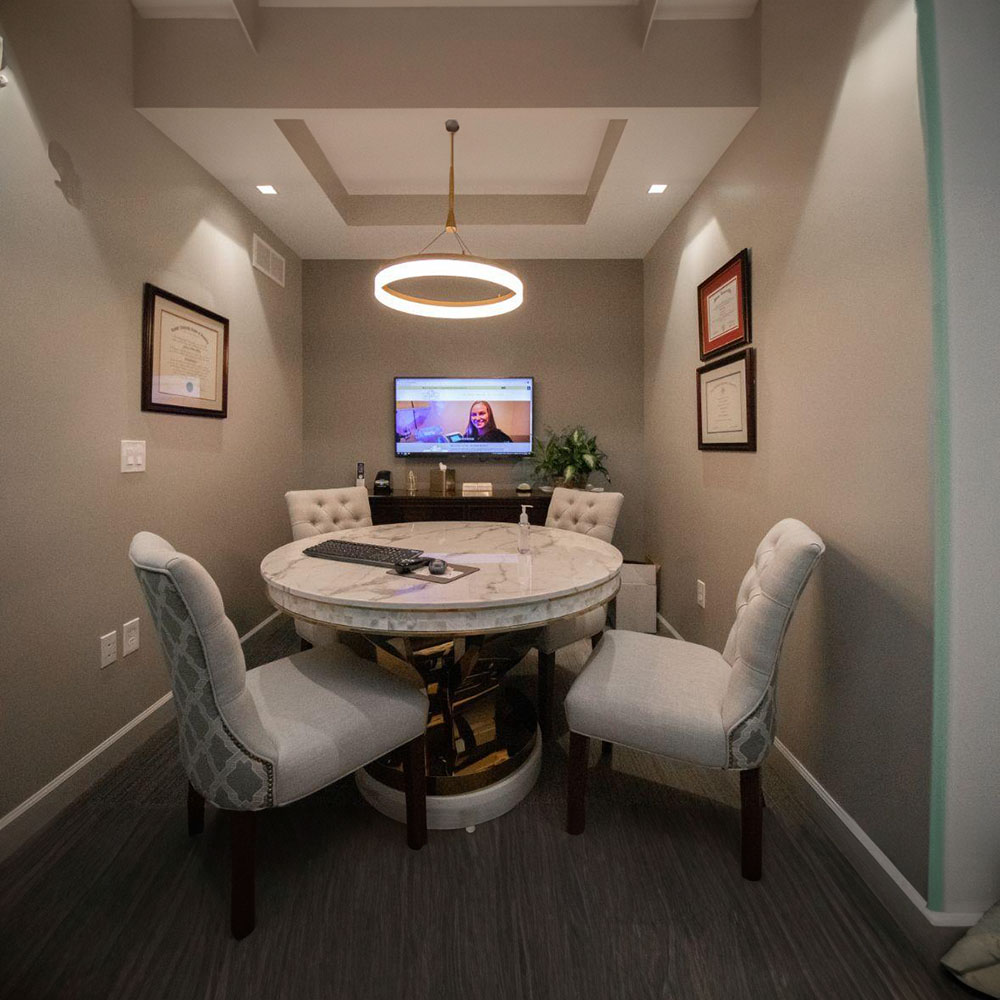
The path to a restored, high-functioning smile is a journey of precision, and it begins with a single, focused conversation. We invite you to experience the intersection of clinical mastery and uncompromising luxury at The Haddon Dentist. Whether you are seeking the immediate results of CEREC® same-day crowns, exploring the life-changing benefits of dental implants, or ready to revitalize your aesthetic with professional teeth whitening, we are here to curate a plan tailored exclusively to you. Your time is your most valuable asset, and we cherish the opportunity to provide the elite care you deserve in an environment that respects your comfort and your goals.